Morocco Travel Blog · 11 min read
What to Eat in Marrakech: A Street Food Guide for 2026
A field-tested Marrakech street food guide for 2026 — what to order at Jemaa el-Fnaa, the best snail seller, real prices in dirhams, and how to eat from a stall without getting sick.
By MoroccoForYou Editorial · Published May 16, 2026 · Updated May 29, 2026
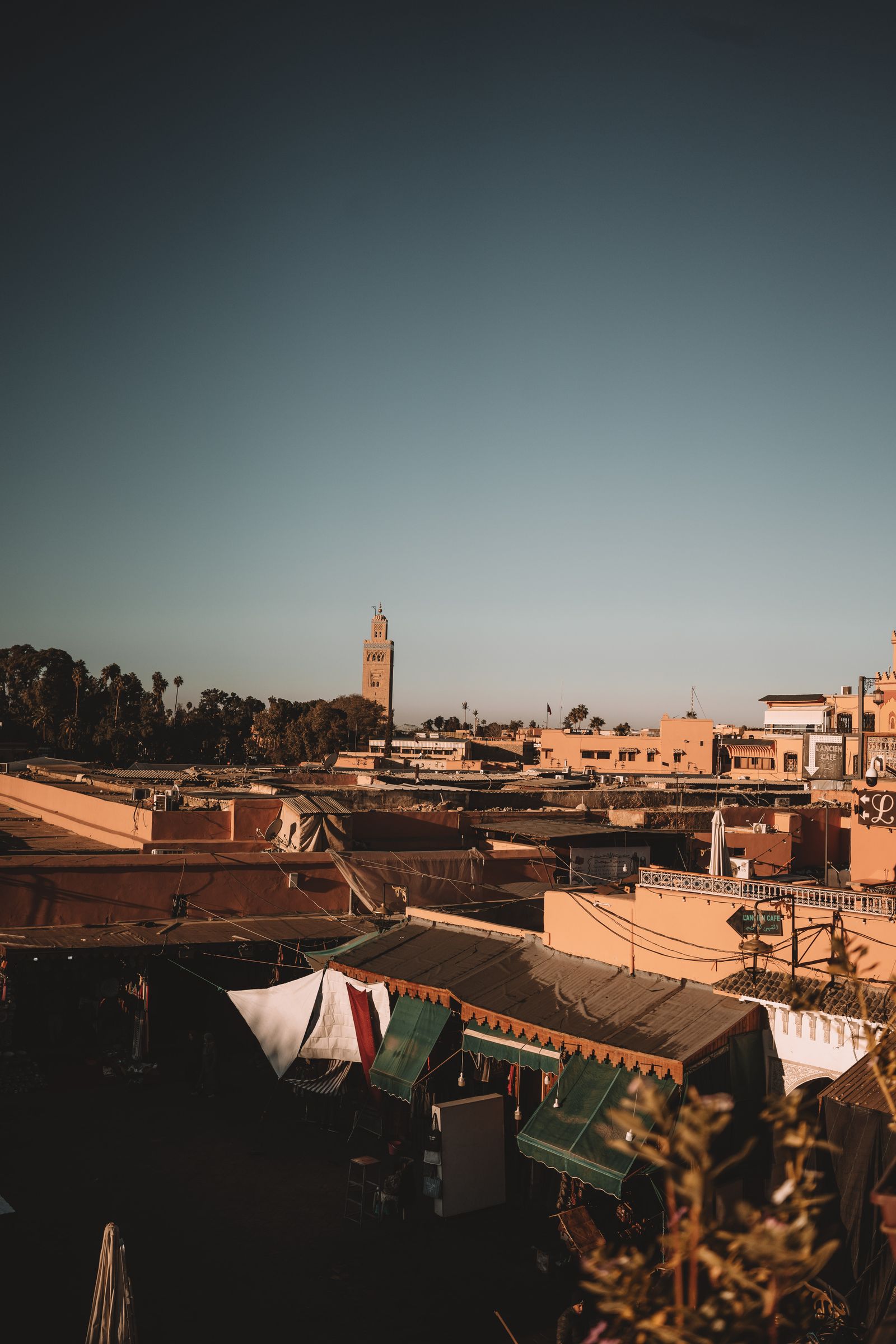
The best place to eat in [Marrakech](/destinations/marrakech/) is not the rooftop restaurant your hotel will recommend — it’s the numbered food stalls of Jemaa el-Fnaa at sunset, where steam, lanterns and the call of competing vendors turn dinner into theatre. This 2026 street food guide tells you exactly what to order in Marrakech, which stalls are safe (most of them), what to skip, and how much it really costs. Prices below are real, gathered on a normal Tuesday in May 2026.
The 8 things you must try in Marrakech
Marrakech’s signature dishes split between hearty cooked food (tagines, tangia, harira), snacks and grills (msemen, kebabs, snails) and sweets (sfenj, chebakia, mint tea). Aim to try each of the eight below at least once during a 3–4 day visit. Many overlap; you can knock off four in one Jemaa el-Fnaa dinner.
- Tangia — slow-cooked beef in a clay urn, the Marrakech-only signature. Order at lunch at Mechoui Alley.
- Tajine — lamb-prune, chicken-lemon-olive, or kefta-egg. Best on a rooftop with a view.
- Mechoui — slow-roasted lamb shoulder, sold by weight at Mechoui Alley off the main square.
- Bessara — fava-bean soup with cumin and olive oil, the breakfast of working Marrakech.
- Snails (boubbouche) — small sea-snails in a peppery broth, sold at numbered stalls 1, 31, 14. MAD 15 a bowl.
- Msemen — flaky square pancake, eaten with honey and cheese or stuffed savoury.
- Sfenj — Moroccan ring doughnut, hot from the oil, MAD 2–3 each.
- Mint tea — sugared green tea with fresh mint, the constant background music of any meal.
Jemaa el-Fnaa stall by stall — the practical map
Around 7pm the square transforms: cooking stalls roll out, smoke rises, numbered signs go up. Don’t commit to one too fast — walk the full square first, then double back to whatever looked busy. Locals queue at the busy stalls; that’s your signal.
| Stall type | What to order | Price | How to spot it |
|---|---|---|---|
| Snail soup carts (#1, 14, 31) | Bowl of snails + broth | MAD 15 (£1.20) | Crowd standing, clay bowls, toothpicks |
| Grill stalls (#14, 32) | Brochettes (kebabs) + bread + salad | MAD 60–90 | Hot grill, mixed vegetables, locals at benches |
| Tagine stalls (#31, 117) | Tagine of the day | MAD 50–80 | Conical clay pots, slow simmer |
| Fish stalls (#14) | Fried sardines + chips | MAD 40–60 | Big platter of small whole fish |
| Sheep’s head stall (#26) | Boiled head + tea | MAD 30–50 | For the brave — order half not full |
| Juice carts (#1, 16) | Fresh OJ | MAD 4–8 | Pyramid of oranges, hand-press |
Street food safety — what really matters
Marrakech street food is far safer than internet horror stories suggest. The food cooks at 200°C, the turnover is fast, and the busy stalls would not survive a single dirty week. Real risks are minor.
- Skip pre-cut fruit from carts — slicing in advance is the only common bacterial risk.
- Drink bottled water (€0.30 / 1.5L) or fresh juice from a hand-press, not water from a cup.
- Choose the stall where locals queue. Empty stalls have empty stalls for a reason.
- Bring hand sanitiser — handwashing facilities at stalls are limited.
Outside the square — the best non-tourist food
Locals don’t eat at Jemaa el-Fnaa every night. For where Marrakech actually eats, walk 5 minutes south from the square to the Souk Semmarine area and take a left into the Mellah (Jewish quarter). The little corner restaurants serve harira, tangia and grilled liver to families and shopkeepers from MAD 30 a plate.
For an upmarket but still local experience, book Mechoui Alley for lunch (MAD 80 for a generous slab of lamb shoulder with cumin and bread) or Café Clock for camel burgers and modern Moroccan cooking. We also love Henna Café, a tiny vegetarian place by the Ben Youssef Madrasa.
Sweets, pastries and the mint tea ritual
Moroccan sweets are dense, sticky and dangerously good. The medina’s pastry shops (look for the steel trays in shop windows) sell briouats (sweet samosas), gazelle horns (almond-paste crescents), and chebakia (sesame-and-honey twists, peak during Ramadan).
Mint tea is the universal welcome, the universal closer, and a small ritual: the pourer holds the teapot a metre above the glass, sugar is dosed by the host, and the first cup is "bitter as death". Always accept at least one.
Cooking classes — the best souvenir
A 4-hour cooking class is the best Marrakech souvenir under €50. The classic format: meet at the market, choose meat and vegetables with the chef, return to a riad kitchen, cook one tagine and two salads, eat with mint tea on the terrace. Recommended: La Maison Arabe, Souk Cuisine, Café Clock cooking class.
Bring a notebook — the spice ratios are the part you’ll forget by the time you’re home.
Vegetarian, vegan and dietary needs
Vegetarian travellers eat very well in Marrakech. Vegetable tagine, zaalouk (aubergine-tomato salad), taktouka (pepper-tomato salad), msemen with cheese, hummus, harira (often meat-free), couscous (ask "sans viande"). Vegans need to flag "no butter" since most pastries and breads include it.
Coeliac travellers should be careful — wheat is in almost everything (bread is sacred). Tagines without bread, grilled fish, rice with vegetables work. Most riads will adapt with a day’s notice.
Best time of day to eat where
Morning: breakfast at your riad, then a msemen and mint tea from a medina stall around 10am for the second breakfast everyone in Morocco has. Lunch: Mechoui Alley before 2pm (they sell out). Afternoon: pastries and mint tea on a rooftop. Evening: Jemaa el-Fnaa from 7pm to 10pm — start before sunset for the best stall choice.
Plan your Morocco trip with us
MoroccoForYou is a Morocco-based agency. Tell us your dates on WhatsApp — we reply within an hour with a draft itinerary, hotel options and a car or driver quote.