Morocco Travel Blog · 16 min read
Essaouira Travel Guide 2026: Morocco's Windy City Where Marrakech Comes to Breathe
The complete Essaouira guide written by a Casablanca-based team that drives clients to Essaouira as both a day trip and a coastal escape. Real 2026 prices, the honest wind-versus-beach trade-off, Gnaoua Festival dates, the Game of Thrones and Odyssey filming connection, argan oil cooperatives, and exact distances from every Moroccan city.
By Omar L. — Casablanca Local & Morocco Road Trip Specialist · Published August 11, 2026 · Updated August 11, 2026
If Marrakech is Morocco turned up to full volume, Essaouira is where the country exhales. A fortified 18th-century port town on the Atlantic coast, Essaouira trades souk chaos for salt air, snake charmers for seagulls, and desert heat for a wind so constant it shaped the entire local culture. Our Casablanca-based team drives clients to Essaouira constantly, usually as a coastal counterpoint to Marrakech's intensity. This is the honest, practical guide we give them.
Is Essaouira Worth Visiting? The Honest Answer
Essaouira solves a problem most Morocco itineraries don't know they have: decompression. After two or three days of Marrakech's sensory intensity, Essaouira is a genuine release valve. The medina is compact and walkable in under an hour, the vendor pressure is a fraction of Marrakech's.
What Essaouira has that no other Moroccan coastal city matches: an intact 18th-century UNESCO-listed medina behind still-standing sea ramparts, one of Africa's most important annual music festivals, blue fishing boats and a working port, and wind strong enough to have built a genuine international windsurfing reputation.
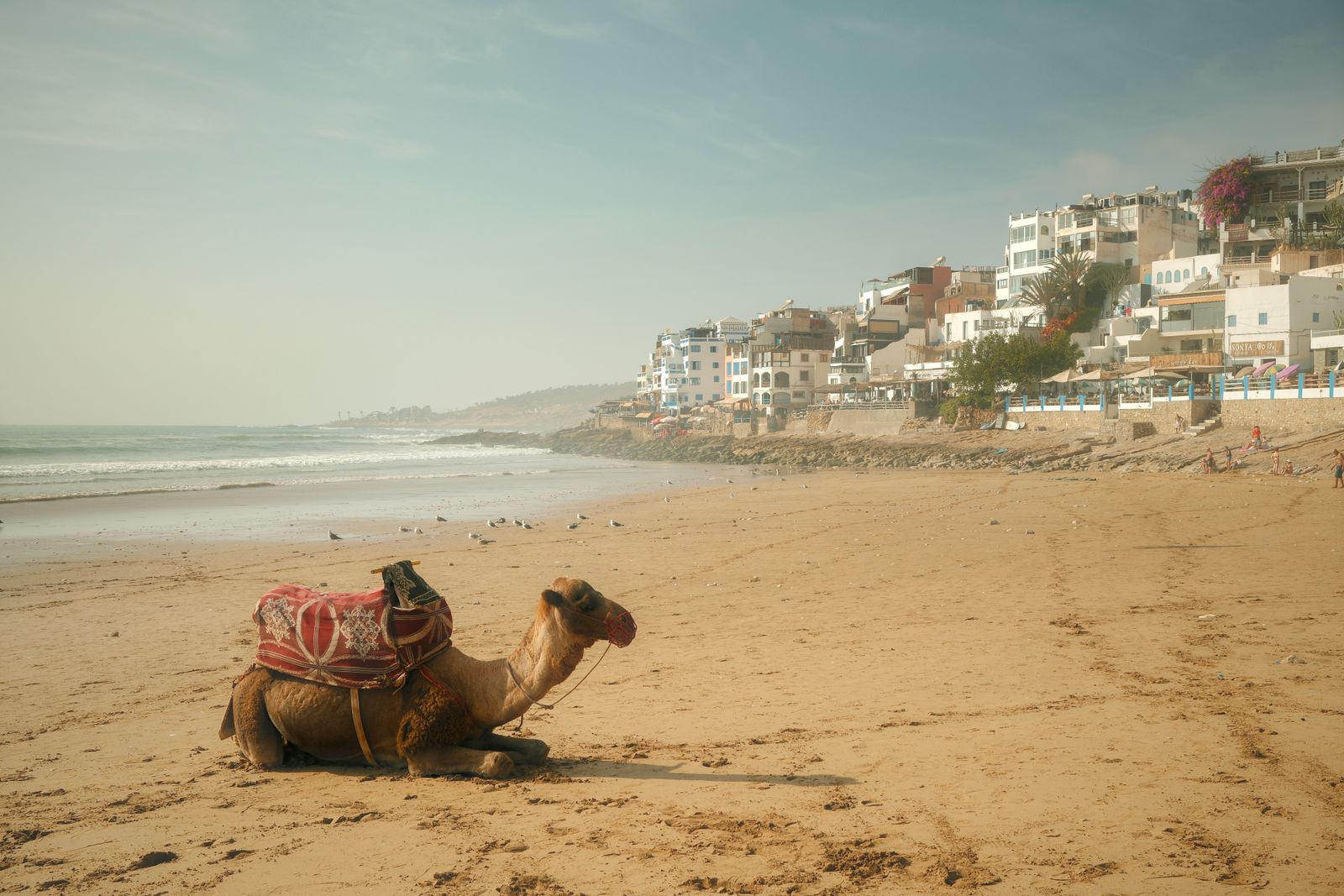
The honest caveat: Essaouira is not a swimming beach in the way Agadir is. The same wind that makes it a world-class watersports destination makes the water choppy and the air noticeably cooler than Morocco's other coastal towns, even in summer.
Essaouira Quick Facts 2026
Everything you need to know before arrival.
| Fact | Detail |
|---|---|
| Former name | Mogador — from the Phoenician "Migdol," meaning small fortress |
| Population | ~90,000 |
| UNESCO status | Medina inscribed as World Heritage Site (2001) |
| Region | Marrakech-Safi, Atlantic coast |
| Airport | Essaouira-Mogador Airport (ESU) — limited flights |
| Nearest major airport | Marrakech Menara (RAK) — 175–190 km, 2h30–3h |
| Distance from Casablanca | ~350 km |
| Distance from Agadir | ~175–190 km, 2h15–2h30 |
| Best known for | UNESCO medina, sea ramparts, wind sports, Gnaoua Festival, argan oil, seafood |
| Best time to visit | April–June and September–October |
| How many days needed | 1–2 days minimum |
| Car rental from Marrakech/Casablanca | From MAD 250/day (€23) |
The Skala Ramparts and Medina — What to See
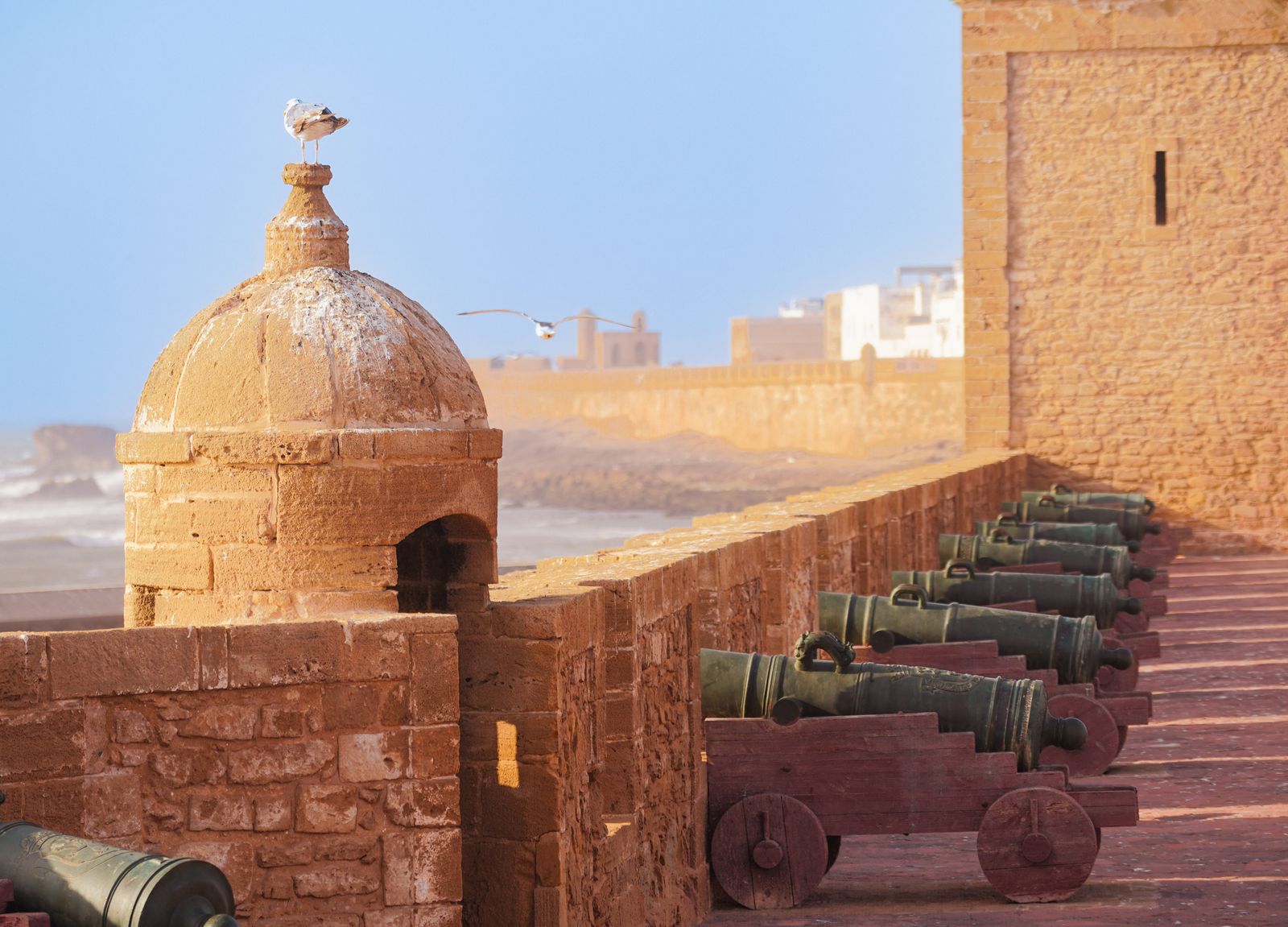
Essaouira's defining architectural feature is the Skala de la Ville — a long, cannon-lined sea rampart built by French engineer Théodore Cornut in the 1760s under Sultan Mohammed III. Walking the ramparts at sunset is the single most photographed experience in the city.
The medina behind the ramparts is compact, low-rise, and genuinely walkable — laid out on a grid system unusual for a Moroccan old town.
| Attraction | Time needed | Price | Notes |
|---|---|---|---|
| Skala de la Ville (sea ramparts) | 45 min–1 hour | Free | Best at sunset — cannon-lined terrace, famous film backdrop |
| Skala du Port (port ramparts) | 20–30 min | Small entry fee | Smaller rampart overlooking the fishing port |
| Fishing port and fish market | 30–45 min | Free to walk | Blue boats, dockside catch, grilled fish stalls |
| Place Moulay Hassan | 30 min+ | Free | Medina social heart — main Gnaoua Festival stage |
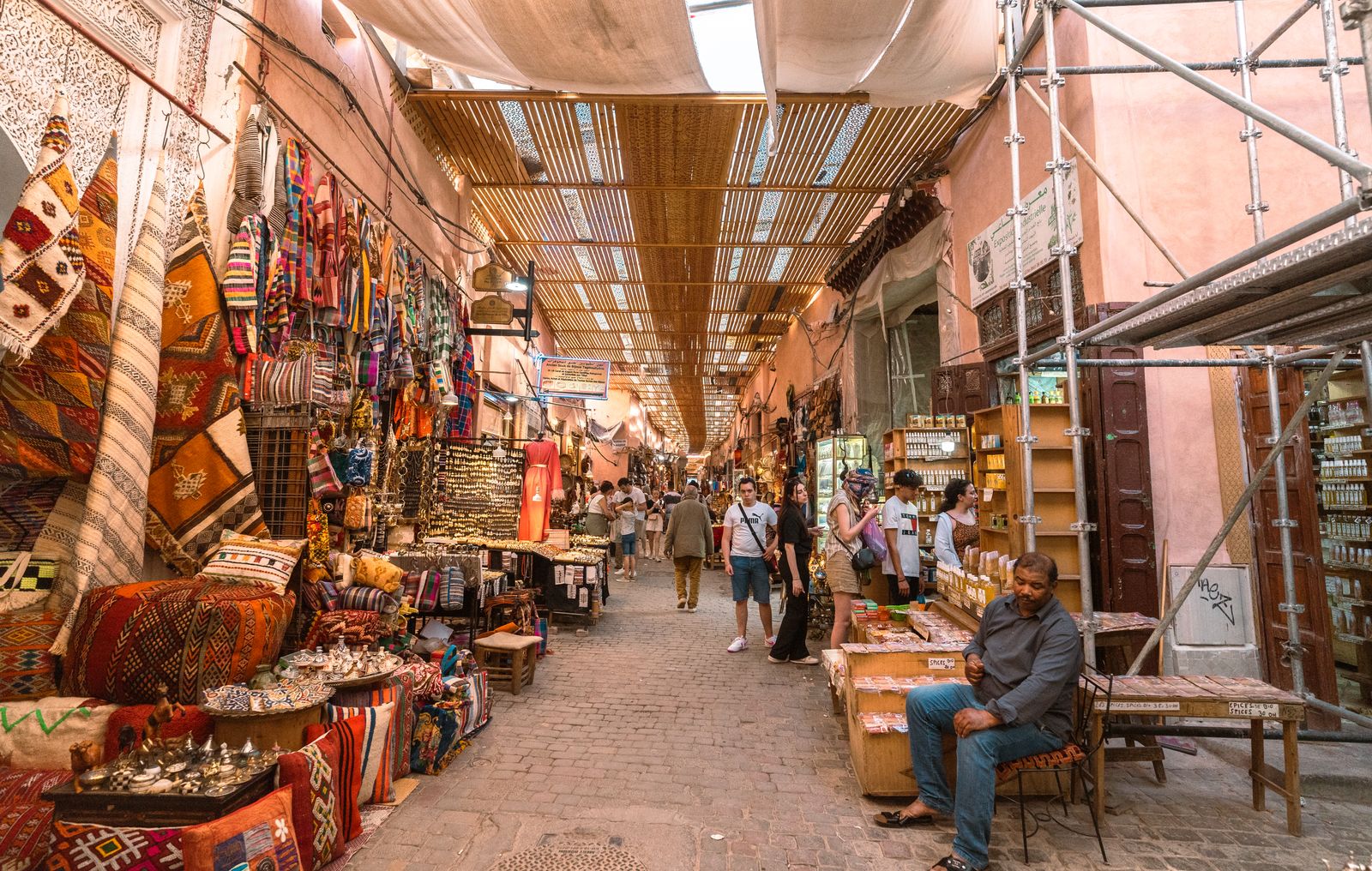
| Medina souks | 1–2 hours | Free to browse | Thuya wood carving, silver jewellery, art galleries |
| Purple Isle (Iles Purpuraires) | Boat trip, half day | Varies | Small archipelago offshore, historic dye site |
| Beach and wind sports | 1–2 hours | Varies | South of medina — better for wind sports than swimming |
Gnaoua World Music Festival — Dates and Practical Guide
The Gnaoua World Music Festival is Essaouira's biggest annual event, drawing hundreds of thousands of visitors to a town of 90,000 for three days each June. Founded in 1998 to celebrate Gnawa music — inscribed by UNESCO as Intangible Cultural Heritage in 2019 — the festival has hosted Carlos Santana, Robert Plant, Marcus Miller and Pat Metheny alongside Gnawa maalems.
The 2026 edition runs June 25–27. The main stage sits at Place Moulay Hassan, with dozens of free performances throughout the medina, beach and ramparts.
Wind, Surf and Watersports — Essaouira's Real Identity
The trade wind — locals call it the Alizé — blows almost constantly from spring through autumn, turning Essaouira into one of Africa's premier windsurfing and kitesurfing destinations. This same wind is why the water is choppy and the air cooler than Agadir, even in July.
| Activity | Best months | Skill level | Notes |
|---|---|---|---|
| Windsurfing | April–September | Intermediate to advanced | One of the most reliable wind destinations in North Africa |
| Kitesurfing | April–September | All levels with lessons | Schools along the beach south of the medina |
| Surfing | Year-round, best autumn/winter | Beginner to intermediate | Gentler than Taghazout |
| Sunset rampart walk | Year-round | Everyone | Wind drops toward evening |
What to Eat in Essaouira
Essaouira's food identity is built around its working port — the best place in Morocco to eat fish landed the same morning.
| Dish/Experience | Where | Price | Notes |
|---|---|---|---|
| Port fish stalls | Fishing port | MAD 50–120 | Choose your catch, pay by weight, grilled in front of you |
| Sardines grilled or fried | Port stalls, restaurants | MAD 30–60 | Essaouira is a major sardine-fishing port |
| Seafood tagine | Medina restaurants | MAD 80–150 | Fish, shrimp and calamari with local spices |
| Argan oil products | Souks, cooperatives | MAD 100–250/bottle | Buy direct from women's cooperatives |
| Mint tea at Place Moulay Hassan | Café terraces | MAD 10–20 | The essential Essaouira pastime |
Essaouira's Jewish Heritage — Why Jews Are Remembered So Fondly Here
Essaouira holds one of Morocco's most significant and best-preserved Jewish heritage sites, and it is worth understanding why before you walk through the Mellah. When Sultan Sidi Mohammed Ben Abdallah founded the fortified port in the 1760s, he deliberately invited Jewish merchants to settle and trade here, granting them a formal role in connecting Morocco to European commerce. The city grew so closely tied to this community that by the late 19th century, Jews made up close to 40% of Essaouira's population — the only city in the Arab world where Jewish residents were, at times, a near-majority.
This was not tolerance in a passive sense; it was active partnership. The Mellah — the historic Jewish quarter, whose name comes from the Arabic word for "salt" — was not a ghetto in the European sense. Jewish families lived under royal protection, many wealthy merchant families lived outside the Mellah entirely, and Stars of David are still visible carved above doorways throughout the old quarter, a quiet, permanent marker of how openly the community was acknowledged. Morocco's 2011 constitution formally names the "Hebraic" component as part of the nation's identity — one of very few constitutions in the Arab world to do so.
Most of Essaouira's Jewish residents emigrated after 1948, largely to Israel, France and Canada, and the Mellah fell into disrepair for decades. But the connection never fully broke. Each September, thousands of Jewish pilgrims — from Israel, France, Canada and beyond — return to Essaouira for the hiloula, an annual pilgrimage to the tomb of Rabbi Haim Pinto (1748–1845), a revered religious figure whose mausoleum sits in the old Jewish cemetery by the sea. It is one of the only places in the Arab world where an active Jewish pilgrimage tradition continues uninterrupted, openly, and with state support.
| Site | What it is | Location | Notes |
|---|---|---|---|
| Bayt Dakira ("House of Memory") | Restored synagogue, museum and research centre | Edge of the Mellah | Inaugurated by King Mohammed VI in 2020 — the flagship site to start at |
| Slat Lkahal Synagogue | Restored 18th-century community synagogue | Within the Mellah | One of the original community houses of worship, now open to visitors |
| Haim Pinto Synagogue | Small private synagogue and rabbi's former home | Near Bab Doukkala, edge of Mellah | Named for Rabbi Haim Pinto — the annual hiloula pilgrimage site each September |
| Old and new Jewish cemeteries | Historic burial grounds by the sea wall | Adjacent to the Mellah | Rabbi Pinto's mausoleum, plus graves of merchant families going back generations |
| The Mellah quarter | Former Jewish neighbourhood, now partly restored | Northern medina, along the ramparts | Star of David carvings still visible above doorways; artisan studios now occupy many buildings |
Essaouira vs Agadir — The Coastal Question
Clients heading to Morocco's Atlantic coast constantly ask which town to prioritize.
| Aspect | Essaouira | Agadir |
|---|---|---|
| Character | Historic UNESCO fortified medina, bohemian | Modern beach resort, rebuilt after 1960 |
| Beach | Windy, choppy water, better for wind sports | Wide, sheltered, swimmable, 10km |
| Wind | Strong and defining | Milder, more consistent for lounging |
| Medina/culture | Compact UNESCO medina, art galleries | No historic medina |
| Best for | Culture + coast combo, windsurfers | Beach holiday, warm winter sun |
| Distance from Marrakech | 175–190 km, 2h15–2h30 | 260 km, 2h30–3h |
How to Get to Essaouira — Distances From Every Major City
Essaouira sits on Morocco's Atlantic coast, most commonly reached via Marrakech.
| From | Distance | Driving time | Route |
|---|---|---|---|
| Marrakech | 175–190 km | 2h15–2h30 | Direct road — standard route |
| Casablanca (CMN Airport) | ~350 km | 4h–4h30 | Via Marrakech or coastal via Safi |
| Agadir | 175–190 km | 2h15–2h30 | Coastal N1 road |
| Rabat | ~450 km | 5h30–6h | Via Casablanca and Marrakech |
| Essaouira Airport (ESU) to medina | ~15 km | 20 min | Direct road — limited flights |
Best Time to Visit Essaouira
Essaouira's constant wind is a year-round factor to plan around, not a summer-only phenomenon.
| Period | Temperature | Wind | Verdict |
|---|---|---|---|
| April–June | 18–24°C | Building, strong by June | ⭐ Ideal balance |
| June (Gnaoua Festival) | 20–25°C | Strong | Best cultural experience but book far ahead |
| July–August | 20–26°C | Strongest of the year | Cooler than inland but wind can limit beach comfort |
| September–October | 20–25°C | Easing | ⭐ Excellent — fewer crowds |
| November–March | 13–18°C | Present but variable | Cooler, quieter, still walkable |
Where to Stay in Essaouira
Essaouira has roughly 100 riads and guesthouses within its compact medina.
| Area | Vibe | Best for | Price range/night |
|---|---|---|---|
| Medina (near ramparts) | Historic, atmospheric | First-timers, couples, photographers | MAD 300–1,200 (€28–111) |
| Medina (near Place Moulay Hassan) | Central, social | Solo travelers, backpackers | MAD 200–800 (€18–74) |
| Beach area | Modern hotels, closer to wind sports | Surfers, windsurfers, families | MAD 400–1,500 (€37–139) |
Plan your Morocco trip with us
MoroccoForYou is a Morocco-based agency. Tell us your dates on WhatsApp — we reply within an hour with a draft itinerary, hotel options and a car or driver quote.