Morocco Travel Blog · 10 min read
Fes Medina Guide: Navigate the World’s Largest Car-Free City
A practical Fes medina guide: how to walk Fes el-Bali without getting lost, the must-see madrasas, the tanneries demystified, and where to eat and sleep inside the walls.
By MoroccoForYou Editorial · Published February 5, 2026 · Updated May 8, 2026
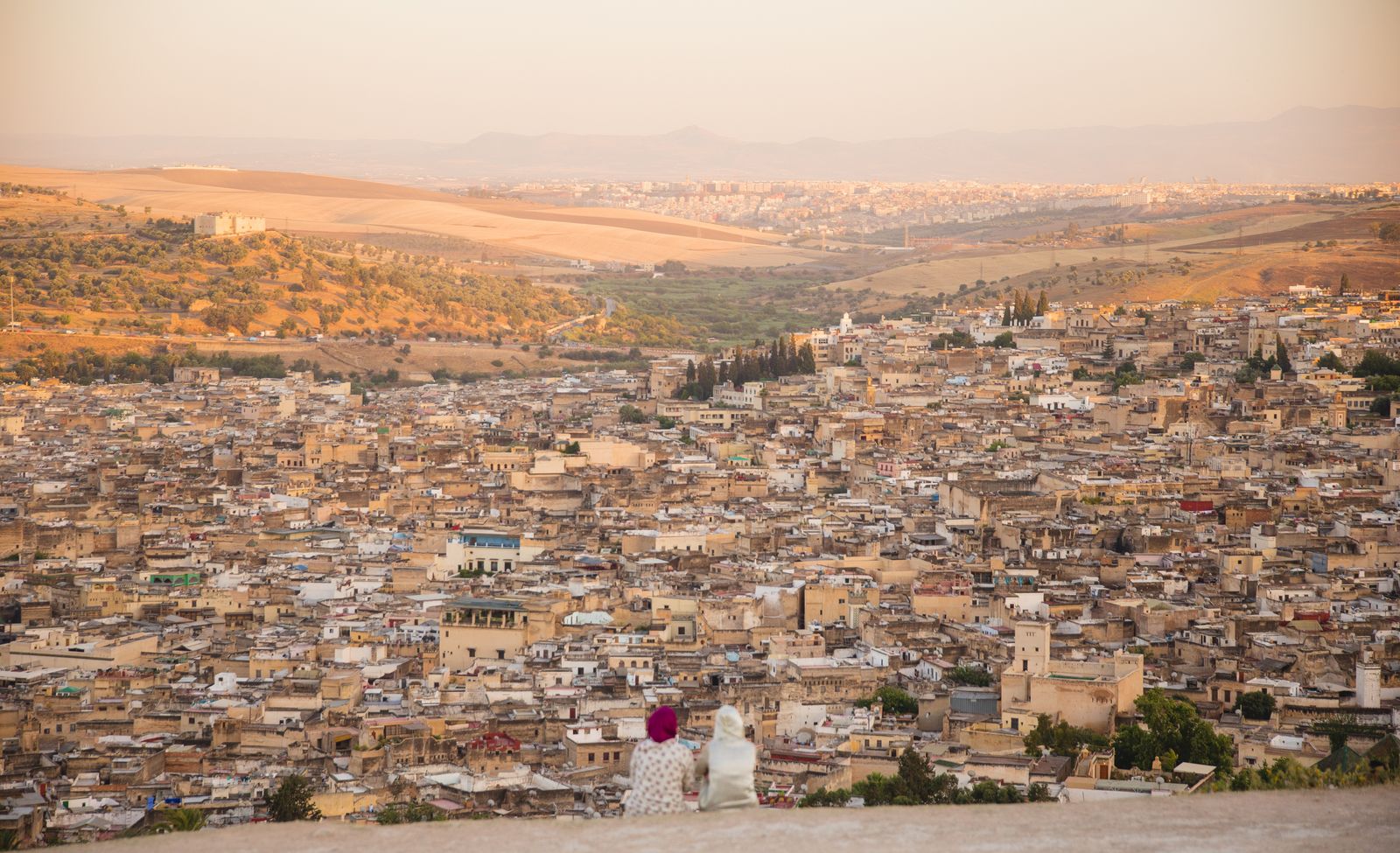
Fes el-Bali, the old walled medina of Fes, has around 9,500 alleys and zero cars — making it one of the largest car-free urban areas on earth, and the most intense walking experience in Morocco. This guide explains how to navigate it, what to prioritize, how the tanneries actually work, and the etiquette that will get you better prices and warmer welcomes.
Should I hire a guide in Fes?
For your first half-day, yes. A licensed Fes guide (gold badge from the Ministry of Tourism) costs €25–€35 for half a day and is the only way you’ll find the major monuments efficiently. Without one, expect to spend 2 hours just locating Al-Qarawiyyin.
After the half-day with a guide, you’ll have your bearings and can explore solo for a second day. Book through your riad — they vet quality and you won’t get a touts-and-tanneries circuit.
The two medinas: Fes el-Bali vs Fes el-Jdid
Fes el-Bali ("old Fes") is the 9th-century walled medina with the souks, madrasas, and the Al-Qarawiyyin. This is where you spend 90% of your time.
Fes el-Jdid ("new Fes") is a 13th-century Merinid extension with the Royal Palace, the Mellah (Jewish quarter), and the Bab Boujloud area. It’s flatter, easier to navigate, and a logical second-day visit.
The classic medina trail
Start at Bab Boujloud (the iconic blue gate). The main downhill artery is Talaa Kebira; the parallel Talaa Sghira runs to its south. Follow Talaa Kebira and you’ll pass:
- Madrasa Bou Inania — the most ornate of Fes’s madrasas, MAD 20 entry
- Nejjarine carpenters’ square + the small Wood Museum (Foundouk Nejjarine)
- Souk el-Attarine — spice souk, then the perfumers
- Al-Qarawiyyin University & Mosque — non-Muslims can only peek through the doors
- Madrasa al-Attarine — the most intricate zellij tilework in Morocco
- Chouara tanneries — viewed from the terrace of a leather shop
The Chouara tanneries: what really happens up there
The Chouara tanneries are the postcard image of Fes — circular stone vats filled with bright pigments and white pigeon-droppings-and-lime mix used to soften the leather. They’ve been operating since at least the 14th century.
Access is via leather shop terraces (mostly free if you’re polite, MAD 20 if there’s pressure). Accept the offered mint sprig — the ammonia smell is fierce. Don’t feel pressured to buy a jacket; a polite "shokran, I am only looking" with a small tip on the way out (MAD 10–20) is perfectly acceptable.
Where to stay inside the medina
Stay in a riad — a traditional courtyard house converted to a small hotel. The atmosphere is incomparable: tiled fountains, cedarwood balconies, rooftop terraces. The trade-off is that most riads are in narrow alleys that mules and porters can reach but cars cannot. Your riad arranges a porter to meet you at the nearest gate.
Recommended: Riad Fes (luxury, member of Relais & Châteaux), Palais Amani (boutique, garden courtyard), Dar Roumana (small, intimate, French chef), Dar Bensouda (mid-range, central). All within 5 minutes of the major sights.
Eating in the Fes medina
Fes is the home of Moroccan haute cuisine: pastilla (sweet-savoury pigeon or chicken pie), méchoui (slow-roasted lamb), and the freshest mint tea you’ll have anywhere. Standout restaurants: Restaurant Numéro 7 (modern Moroccan), The Ruined Garden (English-run, beautiful courtyard), Dar Hatim (family-style traditional), Café Clock (camel burger + cultural events).
Eat where Moroccans eat for lunch — small "Snack" stalls near Bab Boujloud serve harira soup and grilled kebabs for MAD 30–50.
Etiquette and survival tips
Wear closed shoes — the alleys are uneven, occasionally damp, and shared with overloaded mules. Don’t flatten yourself against a wall when a mule comes; step into the nearest doorway. Photography of people requires permission. Friday afternoon many shops close for prayer — schedule tannery and souk visits earlier.
GPS doesn’t work reliably inside Fes el-Bali — too many narrow alleys block satellites. Memorize a few key gates (Bab Boujloud, Bab Rcif, Bab Guissa) and you can always navigate back to a main road.
Plan your Morocco trip with us
MoroccoForYou is a Morocco-based agency. Tell us your dates on WhatsApp — we reply within an hour with a draft itinerary, hotel options and a car or driver quote.