Morocco Travel Blog · 16 min read
Fes Travel Guide 2026: Morocco's Spiritual Capital — 40 Things to Know Before You Arrive
The Fes guide written by people who send hundreds of travelers there from Casablanca every year. How to navigate the world's largest car-free urban area, the tannery secret nobody shares, why Al-Qarawiyyin matters, the honest comparison with Marrakech, and the day trips that make Fes the best base in northern Morocco.
By Omar L. — Casablanca Local & Morocco Road Trip Specialist · Published August 10, 2026 · Updated August 10, 2026
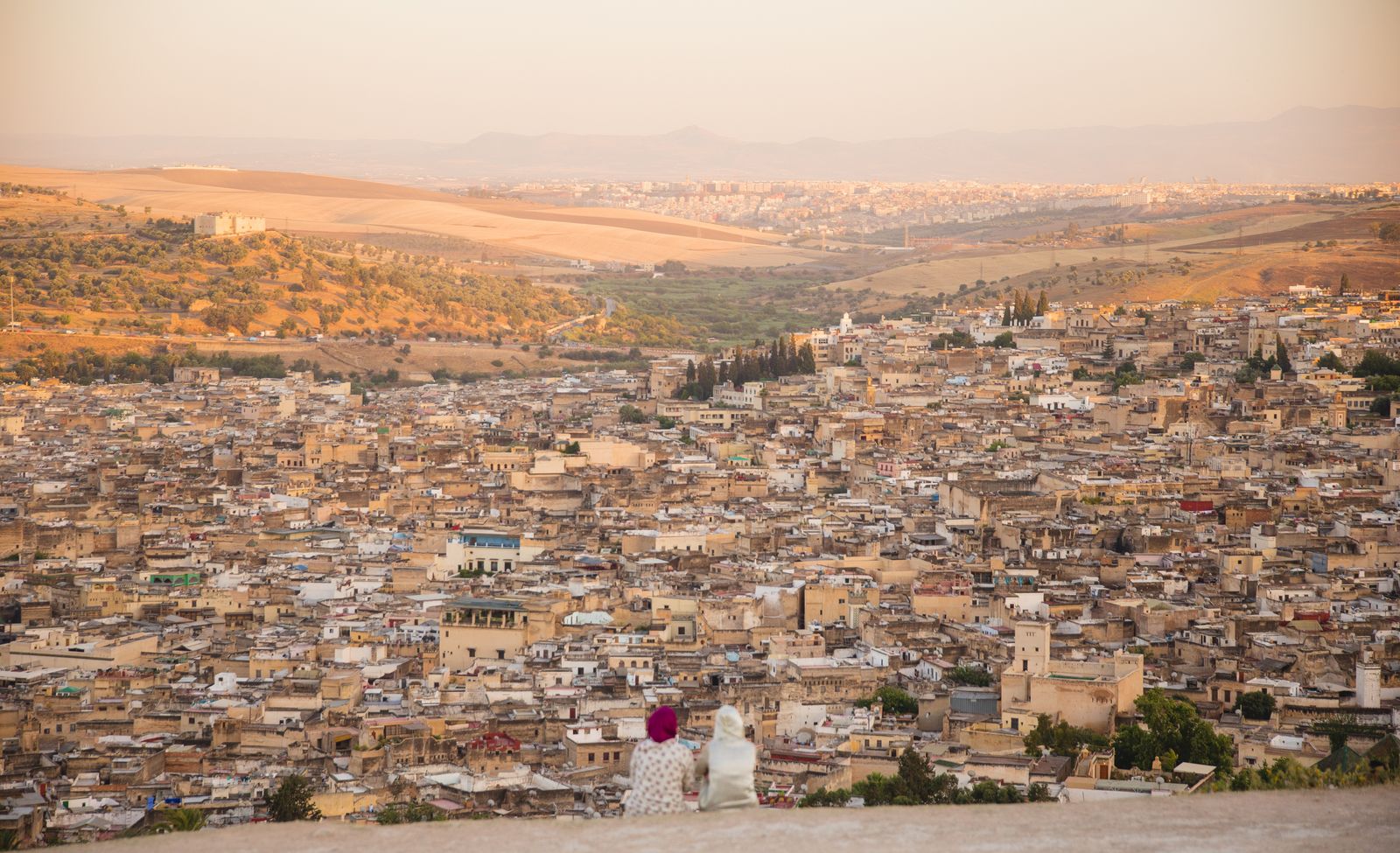
If Marrakech is Morocco's theatrical heart, Fes is its soul. Founded in 789 AD, Fes is one of the oldest cities in the Islamic world and home to the most extraordinary living medieval city on earth — a UNESCO-listed medina of 9,000+ alleyways where donkeys still deliver goods, artisans still work in 12th-century techniques, and the world's oldest continuously operating university still teaches. Our Casablanca-based team has driven hundreds of clients to Fes over five years. We know what overwhelms first-timers, what gets missed, and what separates a frustrating experience from a transformative one. This is that guide.
Is Fes Worth Visiting? The Honest Answer
Fes is the most rewarding city in Morocco — and the most demanding. Unlike Marrakech, which delivers its highlights quickly, Fes reveals itself slowly. The medina is genuinely impossible to navigate without preparation on the first visit. GPS fails in the covered streets. Signs are minimal. The scale is overwhelming: 9,000 alleyways, 300 mosques, 300 hectares of medieval urban fabric.
The travelers who love Fes are those who slow down, hire a guide for the first day, and give the city time to reveal its logic. By day two, the medina starts to make sense. By day three, it becomes one of the most extraordinary places you have ever walked through.
The travelers who leave disappointed are usually those who tried to navigate independently on day one, got lost in the wrong part of the medina, and spent three hours being followed by persistent unofficial guides. Preparation eliminates this entirely.
Fes Quick Facts 2026
The essentials before you arrive.
| Fact | Detail |
|---|---|
| Founded | 789 AD by Moulay Idriss I — one of Morocco's oldest cities |
| Population | ~1.3 million (4th largest city in Morocco) |
| UNESCO status | Fes el-Bali medina — World Heritage Site since 1981 |
| Medina size | 300 hectares, 9,000+ alleyways — world's largest car-free urban area |
| Airport | Fes Saïss Airport (FEZ) — 15 km from medina |
| Nearest major airport | Casablanca CMN — 280 km, 3h30 by motorway |
| Famous for | Al-Qarawiyyin (world's oldest university), Chouara Tannery, medieval medina, artisan crafts |
| Best time | March–May and September–November |
| How many days | 2 days minimum — 3 for day trips to Meknes and Volubilis |
| Currency | MAD — 1 EUR ≈ 10.8 MAD (2026) |
| Car rental from CMN | From 250 MAD/day (€23) — MoroccoForYou Cars |
The Three Parts of Fes — Which One Are You In?
Fes is not one city — it is three cities layered across 1,200 years of history. Understanding which part you are in changes everything about navigating it.
| District | Founded | Character | Why go |
|---|---|---|---|
| Fes el-Bali (Old Fes) | 789 AD | The ancient medina — 9,000 alleyways, no cars, medieval crafts, mosques, madrasas | The entire Fes experience — everything you came for |
| Fes el-Jdid (New Fes) | 13th century | Medieval "new city" — Royal Palace, Mellah (Jewish quarter), gardens | Royal Palace gates, Mellah, transition between worlds |
| Ville Nouvelle | 20th century (French) | Modern city — hotels, restaurants, transport hubs, banks | Where you arrive, where you sleep (some hotels), where taxis operate from |
Al-Qarawiyyin — The World's Oldest University (Founded 859 AD)
The University of Al-Qarawiyyin is one of the most significant buildings in human history — founded in 859 AD by Fatima al-Fihri, a woman from a wealthy Tunisian merchant family who used her inheritance to establish a mosque and school that would become the world's oldest continuously operating university. This is not a matter of debate but a Guinness World Record and UNESCO recognition.
For over 1,200 years, Al-Qarawiyyin has been in continuous operation. It predates the University of Bologna (1088), Oxford (1096), and Cambridge (1209) by centuries. At its peak, it attracted scholars from across the Islamic world and Christian Europe — including Gerbert d'Aurillac, who later became Pope Sylvester II and is credited with introducing Arabic numerals (the digits 0-9) to Europe after studying here.
Non-Muslims cannot enter the mosque or main university buildings. However, the library — recently restored with a €800,000 investment — occasionally opens for guided visits. The surrounding alleyways, the view from leather shop terraces on Derb Mechattine, and the sound of the call to prayer emanating from this building are experiences available to all visitors. Walking the streets that scholars walked for 1,200 years is itself a form of time travel that most visitors underestimate.
The Chouara Tannery — What Nobody Tells You
The Chouara Tannery is Fes's most iconic sight and one of the most photographed locations in Morocco. It has been in continuous operation since the 11th century, making it the oldest tannery in the world. The stone vats you see — filled with saffron yellow, indigo blue, poppy red, and oxidized white — are largely unchanged from medieval times. Workers stand waist-deep in the dye pits processing animal hides using methods passed down through generations.
Here is what most guides skip: the tannery is technically a private business complex surrounded by leather shops. The best viewing terraces are on the upper floors of these shops — and entry to the terraces is almost always tied to a sales pitch. The shopkeepers will offer you mint to hold against your nose (the smell of the organic dyes is powerful), lead you to the terrace, show you the view, and then present the leather goods. You are under no obligation to buy. You can thank them, decline, and leave.
The best time to visit is mid-morning (9–11am) when workers are most active and the natural light fills the vats. Avoid midday (dried hides, less activity) and very early morning (operations not yet in full swing). Approach from Rue Chouara from the south for the most atmospheric approach.
Best Things to Do in Fes — The Essential List
Fes rewards the patient explorer. These are the experiences that matter most — with honest time estimates and local advice that most guides omit.
| Experience | Area | Time | Price | Local tip |
|---|---|---|---|---|
| Chouara Tannery viewpoint | Eastern medina | 1–2 hours | Free (from shop terraces) | Go 9–11am, approach from Rue Chouara south, bring your own mint leaf |
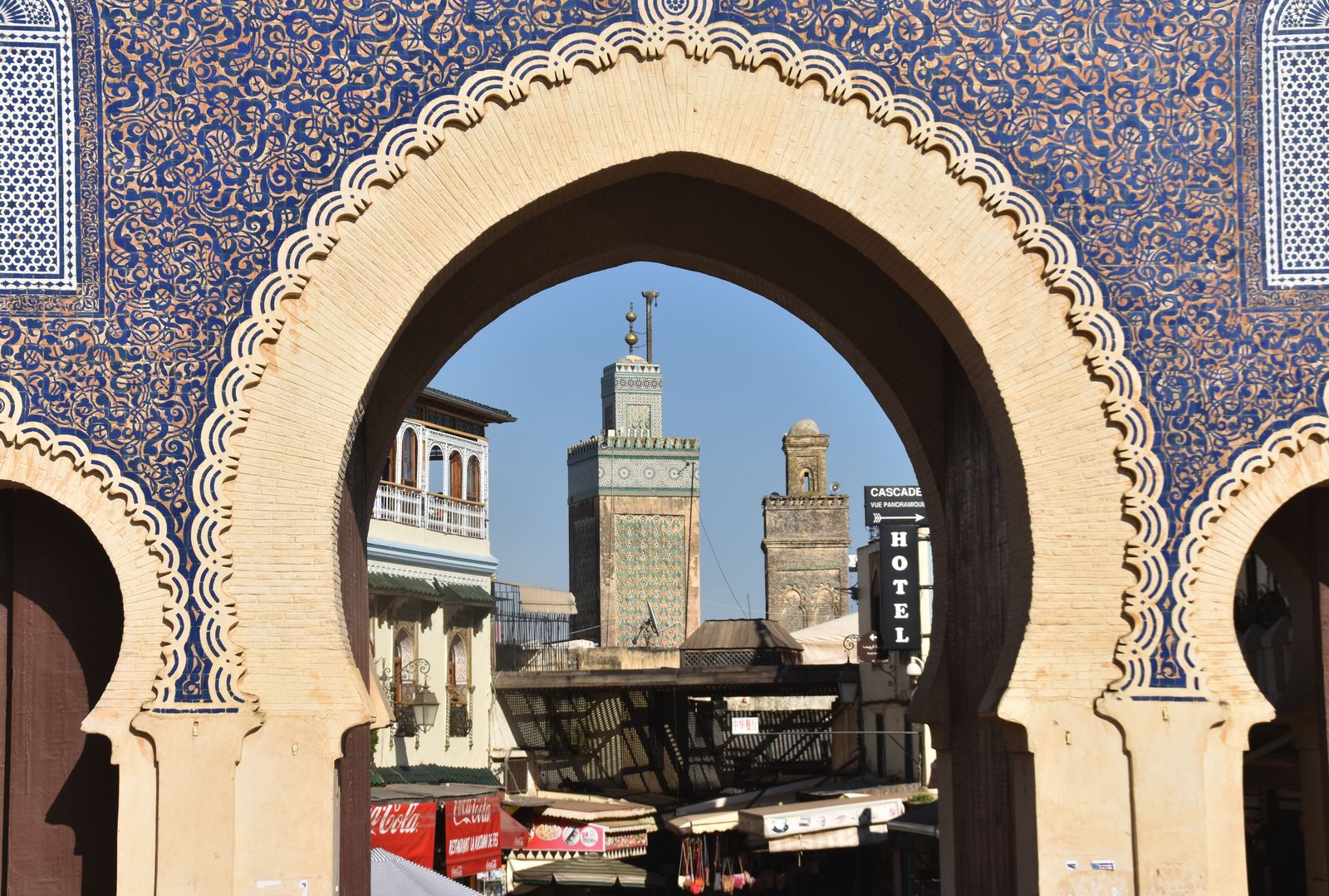
| Bab Boujloud (Blue Gate) | Medina entrance | 30 min | Free | The most beautiful gate in Morocco — best photographed at blue hour (dusk) |
| Bou Inania Madrasa | Near Bab Boujloud | 1 hour | MAD 70 | Finest example of Marinid architecture — 14th century, recently restored |
| Al-Attarine Madrasa | Near Al-Qarawiyyin | 45 min | MAD 70 | Named for adjacent spice market — courtyard rivals Bou Inania for beauty |
| Al-Qarawiyyin area (walk) | Central medina | 1 hour walk | Free | You cannot enter but walking the surrounding streets is the experience |
| Chouara Potters' Quarter | North medina | 45 min | Free | Watch traditional pottery being made and fired — more authentic than tanneries |
| Nejjarine Fountain & Woodwork Museum | Central medina | 1 hour | MAD 20 | One of the most beautiful medina squares in Morocco — the fountain is extraordinary |
| Royal Palace Gates (Dar el-Makhzen) | Fes el-Jdid | 30 min | Free (exterior) | Seven golden gates set in a vast zellige-tiled plaza — photos at golden hour |
| Mellah (Jewish Quarter) | Fes el-Jdid | 1 hour | Free | The former Jewish quarter — different architectural character, less tourist pressure |
| Marinid Tombs viewpoint | Above medina north | 1 hour | Free | Best panoramic view of the entire medina — go at sunset or just before |
| Place Seffarine (Coppersmiths) | Central medina | 30 min | Free | The only medina square where artisans work in the open — deafening and spectacular |
| Jnan Sbil (Royal Gardens) | Between medinas | 1 hour | Free | Oldest public garden in Fes — peaceful escape from medina intensity |
Navigating the Medina — Should You Use a Guide?
This is the most contested question in Fes travel writing, and we will give you an honest answer: yes, for the first half-day. Not because you cannot manage without one, but because a licensed guide unlocks the medina in ways that take independent travelers three days to discover on their own.
A good guide knows which leather shop terrace has the best tannery view, when to visit the madrasas to avoid school groups, which alleyway leads to the active coppersmiths rather than the tourist replica workshops, and how to reach Al-Qarawiyyin library on one of its rare open days. This knowledge takes independent research hours to replicate.
Licensed guides wear official badges and charge MAD 300–500 for a half-day. The fee is set by the government. Anything less and you are hiring an unlicensed guide, which creates a different set of problems. Book through your riad or the Fes tourist office — both can connect you with verified licensed guides.
Where to Stay in Fes — Riad vs Hotel
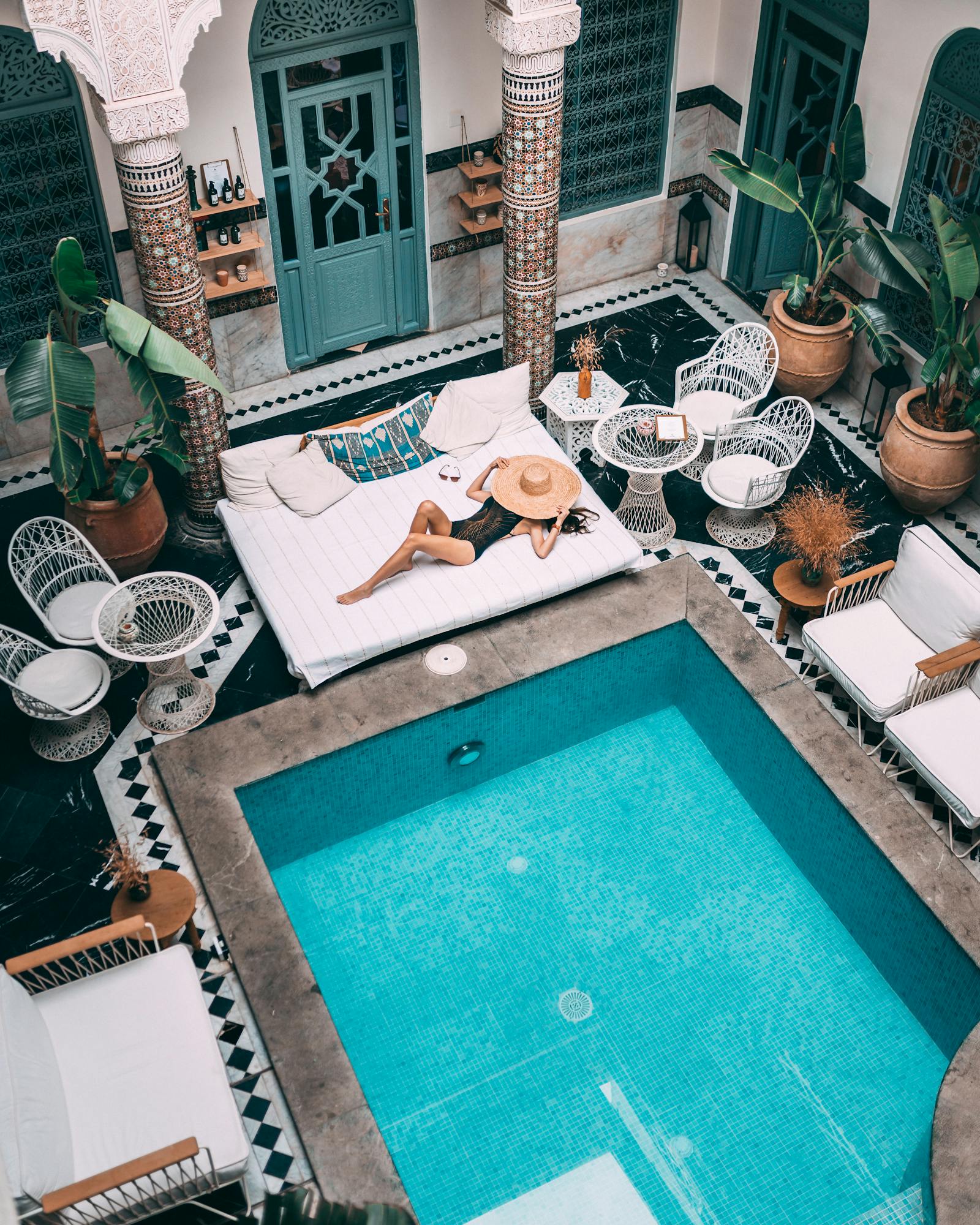
Like Marrakech, Fes has an extraordinary riad culture. Unlike Marrakech, the Fes medina riads are generally less touristy and better value — the city draws fewer mass-market visitors, so the accommodation market is more authentic.
| Area | Vibe | Best for | Price range/night |
|---|---|---|---|
| Medina near Bab Boujloud | Central, convenient, some noise | First-timers, easy medina access | MAD 300–1,200 (€28–111) |
| Medina near Al-Qarawiyyin | Deep medina, most immersive, quieter at night | Those wanting full medina experience, photographers | MAD 400–1,500 (€37–139) |
| Fes el-Jdid | Between old and new city, quieter | Travelers wanting a balance of access and calm | MAD 250–800 (€23–74) |
| Ville Nouvelle | Modern hotels, air conditioning, taxi access | Business travelers, comfort seekers, budget hotels | MAD 200–800 (€18–74) |
What to Eat in Fes — The Local Food Scene
Fes has a more restrained food culture than Marrakech — less theatrical, more serious. The city's cuisine is considered by many Moroccan food scholars to be the most refined in the country, rooted in Andalusian traditions brought by Muslim refugees from Spain in 1492.
| Dish | Where | Price | Notes |
|---|---|---|---|
| Pastilla au pigeon | Traditional Fassi restaurants | MAD 80–150 | Fes is the home of pastilla — sweeter, richer version than anywhere else |
| Lamb mrouzia (sweet spiced lamb) | Riad restaurants | MAD 100–180 | Fassi specialty — honey, ras el hanout, almonds and raisins |
| Tagine with preserved lemon | Local restaurants, medina | MAD 50–100 | Preserved lemon (l'hamd mrakad) is a Fes specialty |
| Harcha (semolina bread) | Bakeries, street stalls, morning | MAD 3–5 | Fes breakfast — denser and richer than elsewhere |
| Bissara (fava bean soup) | Street stalls, morning | MAD 5–10 | Morning fuel of the medina workers — thick, olive oil on top |
| Seffa (sweet couscous with chicken) | Traditional restaurants | MAD 60–120 | Fassi specialty — cinnamon and powdered sugar over couscous |
| Msemen with honey and butter | Street stalls, morning | MAD 3–5 | Flaky square flatbread — the Fes street breakfast |
| Shebakia (sesame honey cookies) | Pastry shops | MAD 30–50/250g | Fried honey sesame spirals — traditionally eaten during Ramadan but available year-round |
Fes vs Marrakech — The Honest Comparison
Our clients ask this question constantly. Here is our definitive answer after five years of sending travelers to both cities.
| Aspect | Fes | Marrakech |
|---|---|---|
| First impression | Overwhelming, disorienting, intense | Theatrical, exciting, accessible |
| Medina size | World's largest car-free urban area — 9,000 alleys | Large but navigable without guide after 1 day |
| Tourist pressure | Moderate — fewer mass market tourists | High — one of Africa's most visited cities |
| Authenticity | Highest in Morocco — genuine living medieval city | High but more tourist-adapted |
| Cultural depth | Deepest in Morocco — intellectual, spiritual capital | Strong but more sensory than intellectual |
| Day trip options | Meknes, Volubilis, Middle Atlas, Sahara gateway | Atlas Mountains, Agafay, Essaouira, Sahara gateway |
| Food scene | Considered Morocco's finest cuisine by food scholars | Excellent but more tourist-adapted |
| Weather | Colder winters, hotter summers than Marrakech | Hot summers, mild winters |
| Getting there | 280 km from CMN — 3h30 by car or 3h30 by train | 240 km from CMN — 2h30 by car or 3h by train |
| Who it's for | Curious, patient travelers who want Morocco's soul | First-timers, short stays, day-trippers, families |
| Verdict | The most extraordinary city in Morocco for deep travelers | The most accessible great city in Morocco |
Day Trips from Fes — The Best in Northern Morocco
Fes is the best base for day trips in northern Morocco. Within 1–3 hours, you can reach Roman ruins, a holy pilgrimage city, cedar forests with wild monkeys, and the beginning of the Sahara route.
| Destination | Distance | Drive time | Why go | Car needed? |
|---|---|---|---|---|
| Meknes | 60 km | 1 hour | Morocco's fourth imperial city — Bab Mansour (most beautiful gate in Morocco), Moulay Ismail Mausoleum | Recommended — public transport exists but slow |
| Volubilis (Roman ruins) | 95 km | 1h30 | Best-preserved Roman ruins in Africa — UNESCO site, mosaics, triumphal arch | Yes — combine with Meknes in one day |
| Moulay Idriss Zerhoun | 100 km | 1h30 | Morocco's holiest pilgrimage city — hilltop white village where Islam's founder is buried | Yes — combine with Volubilis/Meknes |
| Ifrane | 65 km | 1h | "Switzerland of Morocco" — European-style mountain town, cedar forest, Barbary macaques | Yes — beautiful drive through Middle Atlas |
| Azrou cedar forest | 90 km | 1h30 | Ancient cedar forest with wild Barbary macaques — extraordinary wildlife experience | Yes — combine with Ifrane |
| Chefchaouen | 200 km | 3h30 | The Blue City — combine as 2-night trip, not day trip | Yes — recommended overnight |
| Sahara/Merzouga | 460 km | 8–9 hours | Erg Chebbi dunes — too far for day trip, 2–3 day tour | Yes — classic Morocco road trip from Fes |
How to Get to Fes from Casablanca — All Options
Fes is 280 km from Casablanca Airport (CMN) — well-connected by motorway, train, and bus.
| Option | Price | Time | Best for |
|---|---|---|---|
| Rental car from CMN | From MAD 250/day (€23) | 3h30 via A2 motorway | Best — freedom for day trips, Meknes/Volubilis en route possible |
| ONCF Train (CMN → Fes) | MAD 115 (2nd class) | 3h30 | Budget travelers without day trip plans |
| CTM Bus | MAD 100–130 | 4h30–5h | Cheapest option but slowest |
| From Marrakech by car | MAD 250/day rental | 3h30 via Casablanca A7+A2 | Most travelers do this as part of a circuit |
| From Chefchaouen by car | MAD 250/day rental | 3h–3h30 | Ideal next stop after Chefchaouen on north loop |
40 Things to Know About Fes Before You Arrive
The practical knowledge our team shares with every client heading to Fes — what most travel guides miss.
- The medina of Fes el-Bali is the largest car-free urban area in the world. No cars, no motorcycles — only pedestrians and donkeys.
- Al-Qarawiyyin, founded 859 AD, is the world's oldest continuously operating university. It predates Oxford by 237 years.
- GPS fails in the covered medina streets — download maps.me before arriving and use it offline.
- Bab Boujloud (the Blue Gate) is your anchor. If you get lost, orient toward Bab Boujloud and work from there.
- Licensed guides wear official government-issued badges. Always check. Unlicensed guides create problems. Fee: MAD 300–500 for half-day.
- The Chouara Tannery viewing terraces are inside leather shops — you're allowed to view without buying, but the shopkeeper will try to sell. No obligation.
- The mint they give you at the tanneries is to mask the organic dye smell, which is powerful. It genuinely helps.
- Fes is colder than Marrakech — the medina sits at 400m altitude and winters are genuinely cold (5–10°C at night in January).
- The medina has three kinds of streets: main commercial derbs (wide, with shops), secondary derbs (residential, medium width), and blind alleys (private — do not enter).
- Donkeys have right of way. Always. When you hear "balak!" (watch out!) — press against the wall immediately.
- The Royal Palace gates are one of the most spectacular photo subjects in Morocco. The palace itself is not open to the public.
- Marinid Tombs at sunset: the best free panoramic view in Morocco. 15-minute walk from Bab Boujloud, follow the signs uphill.
- Fes el-Jdid (the 13th-century "new city") has the Mellah — the former Jewish quarter with distinctive wooden balconies on the upper floors of houses.
- The Mellah synagogues and cemeteries are open to visitors — an important part of Fes history that most visitors skip entirely.
- Place Seffarine is the only medina square where traditional artisans (coppersmiths) work in the open. The noise and spectacle are extraordinary.
- Nejjarine Fountain is one of the most beautiful architectural details in the medina — a 18th-century fountain of carved cedar, tilework, and plasterwork that takes your breath away.
- The Bou Inania Madrasa (14th century) is the most complete example of Marinid architecture in Morocco and one of the few religious buildings in Fes open to non-Muslims.
- Al-Attarine Madrasa, near Al-Qarawiyyin, is equally beautiful but receives fewer visitors — the courtyard is one of the finest in North Africa.
- Fassi cuisine is considered Morocco's most refined. The local specialty is pastilla au pigeon — a sweet-savoury pastry that originated in Fes.
- The preserved lemon (l'hamd mrakad) in Fassi tagines is a local specialty. They are salt-cured for months in the medina — a flavor you cannot find elsewhere.
- Fes has genuine working artisan quarters — not tourist replicas. The leather workshops, pottery quarter, and metalwork shops are active businesses supplying local and international markets.
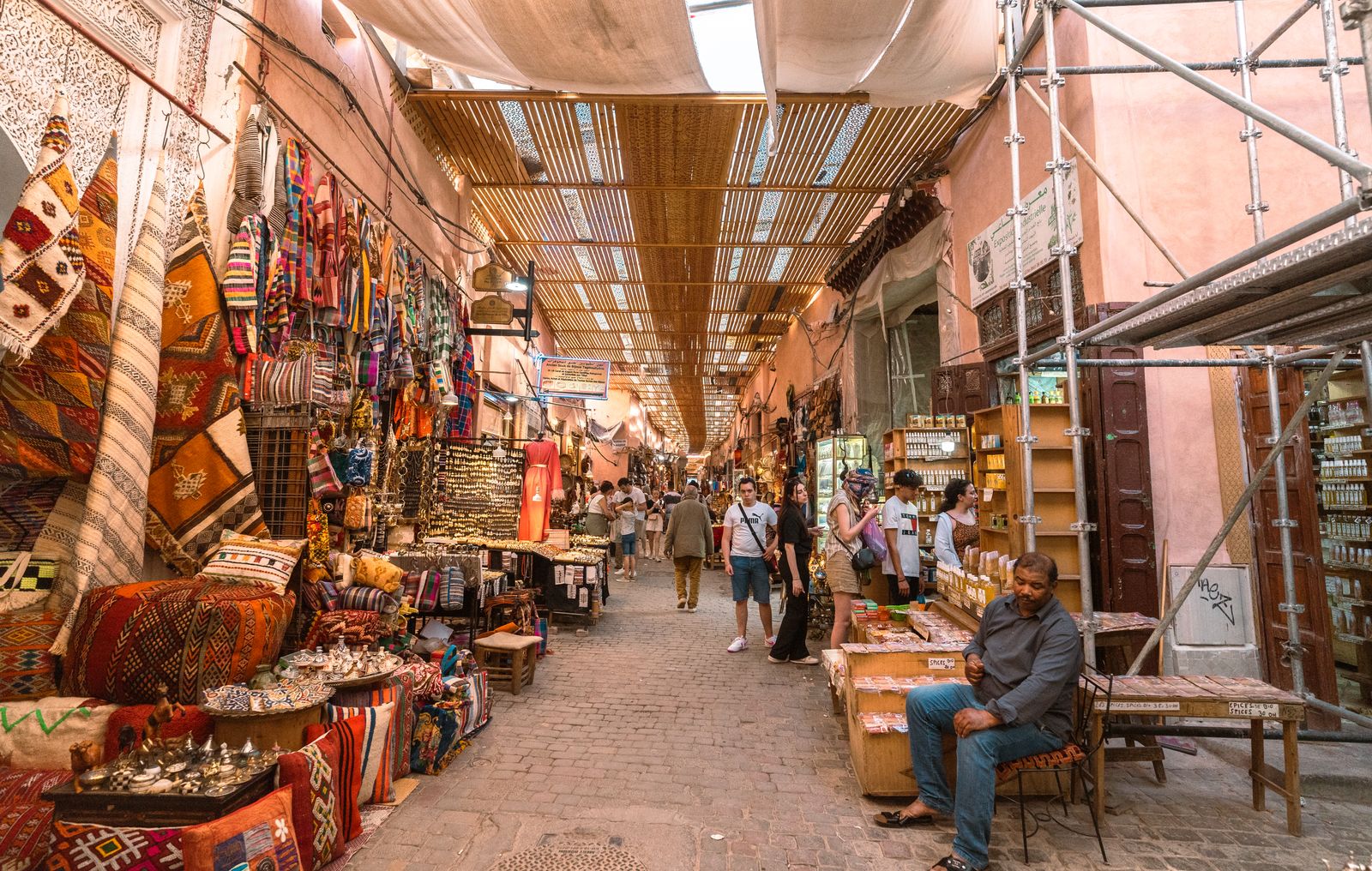
- Shopping in Fes: quality is higher and prices are lower than Marrakech for most artisan goods. The vendors are less aggressive.
- The best ceramics in Morocco come from the pottery district outside the medina walls — the Ain Nokbi pottery quarter where you can watch the entire process.
- Smoking pipes (sebsi) and traditional Moroccan artisan goods are more authentic and better priced in Fes than anywhere else.
- Fes has two universities — Al-Qarawiyyin (859 AD) and the University of Fes (modern, 20,000+ students). The student population keeps the city intellectually alive in a way unique in Morocco.
- The medina is genuinely residential — families live in the derbs, children play, laundry hangs. You are walking through someone's neighborhood. Behave accordingly.
- Photography etiquette: always ask before photographing people. In the medina, a nod is usually enough acknowledgment. In the tanneries and craft areas, cameras are generally welcome.
- The Festival of World Sacred Music in Fes (usually June) is one of the world's great music festivals — Sufi music, gospel, sacred traditions from dozens of cultures performed in the medina.
- Fes has no beach. Visitors seeking coast should combine with a drive to the Atlantic (Rabat is 2h30) or Mediterranean (Tetouan is 3h).
- Night in the medina is safe and beautiful — the tourist pressure drops completely after 8pm and the alleyways are lit by traditional lanterns.
- The tannery district smells strongest in summer heat — the organic dye vats produce a powerful odor. In winter and spring it is significantly milder.
- Fes to Chefchaouen by car is 200 km, 3h–3h30. The most beautiful road in northern Morocco — many travelers do Fes → Chefchaouen → Tangier as their north Morocco loop.
- The train from Fes to Casablanca (3h30) is reliable, comfortable, and air-conditioned. An excellent option if you don't need a car for the return journey.
- Fes airport (FEZ) serves several European destinations direct — mostly France, Spain, Belgium, and Netherlands. Worth checking if flying onward from Fes.
- Fes to Merzouga (Sahara) is 460 km — a full day's drive through the stunning Ziz Gorge and Middle Atlas. Most travelers do it as a 2–3 day tour.
- The medina of Fes el-Bali has been continuously inhabited for 1,200 years. It is not a museum — it is a living city. The craftspeople you watch are not performing for tourists; they are working.
- Meknes, 60 km away, is often skipped by travelers in a hurry. This is a mistake — Meknes's Bab Mansour is the most beautiful single gate in Morocco, more impressive than anything in Marrakech.
- Volubilis, 95 km from Fes, is North Africa's best-preserved Roman site. The mosaics are extraordinary and largely uncovered. It is easier to access than comparable Roman sites in Tunisia or Algeria.
- Budget for Fes: MAD 500–800/day covers a mid-range riad, restaurant meals, and attraction entry fees. Less if you stay at a budget riad and eat street food (MAD 200–300/day is possible).
- The best time to arrive in Fes is late afternoon — check into your riad, walk to the Marinid Tombs for sunset, have dinner in the medina. Your first full day is then ready for the tanneries and madrasas.
Plan your Morocco trip with us
MoroccoForYou is a Morocco-based agency. Tell us your dates on WhatsApp — we reply within an hour with a draft itinerary, hotel options and a car or driver quote.