Morocco Travel Blog · 17 min read
Sahara Desert Morocco Travel Guide 2026: Everything You Need to Know Before You Go
The complete Sahara guide written by a Casablanca-based team that sends travelers to Merzouga and Zagora year-round. Real 2026 prices, honest safety answer, Merzouga vs Zagora, distances from every major Moroccan city, camel trek tips, desert camp guide, and how to plan the trip whether you drive yourself or book a tour.
By Omar L. — Casablanca Local & Morocco Road Trip Specialist · Published August 10, 2026 · Updated August 10, 2026
The Sahara is the reason many travelers come to Morocco in the first place — and it is also the part of the trip most people get wrong. Which dunes: Merzouga or Zagora? Do you need a 4x4? Is it safe, especially traveling solo or as a woman? How much should it actually cost? Our Casablanca-based team has sent hundreds of clients into the Sahara over the years, whether self-driving from Casablanca Airport or connecting them with trusted desert camps. This guide answers every question honestly, with real 2026 prices and distances from every major Moroccan city — no vague "book with us, it will be amazing" filler.
Merzouga vs Zagora — Which Sahara Should You Visit?
Morocco does not have one "Sahara" — it has two very different desert experiences, and choosing the right one for your trip matters more than almost any other decision in your itinerary.
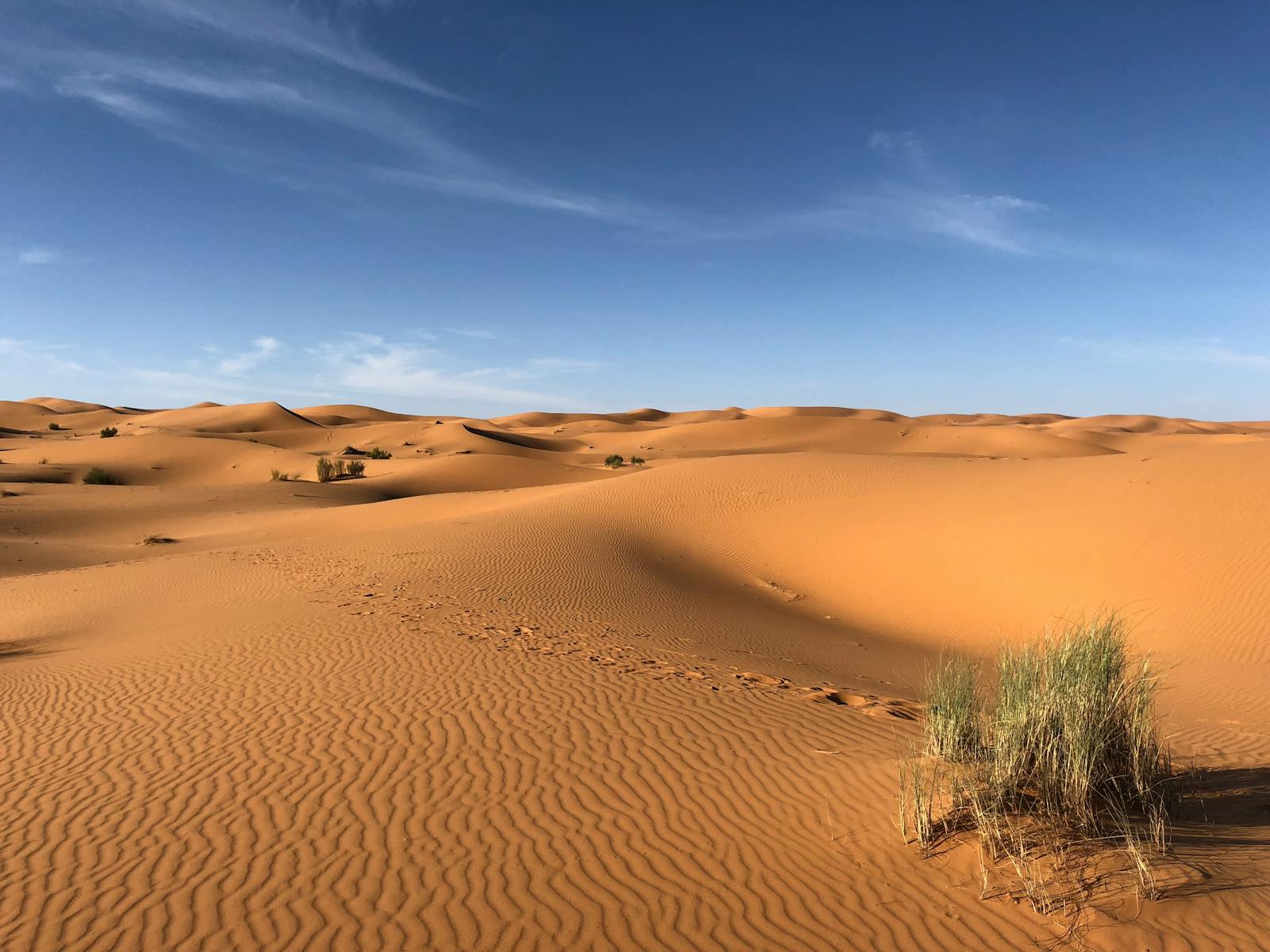
Merzouga sits at the edge of Erg Chebbi, Morocco's tallest and most photogenic dune field — golden dunes reaching 150 metres, with the famous Lala Lallia star dune standing about 100m tall and 700m wide. This is the "postcard Sahara" most travelers picture. Zagora sits near Erg Chigaga, a larger but lower and more remote dune field reached via M'Hamid, generally requiring a 4x4 for the final stretch.
| Factor | Merzouga (Erg Chebbi) | Zagora (Erg Chigaga) |
|---|---|---|
| Dune height | Up to 150m — Morocco's tallest | 40–100m — lower, more spread out |
| Distance from Marrakech | ~560 km, 9–10 hours | ~370 km (to M'Hamid), 8–9 hours |
| Distance from Fes | ~460 km, 7–8 hours | Not practical — Merzouga is the Fes route |
| Access | Paved road all the way to camp edge | Requires 4x4 for final stretch to Erg Chigaga |
| Crowds | Busier — more camps, more tourists | Quieter, more remote, fewer other travelers |
| Best for | First Sahara trip, photography, convenience | Travelers wanting solitude and a wilder experience |
| Typical route | Fes or Marrakech → Ouarzazate → Merzouga | Marrakech → Ouarzazate → Zagora → M'Hamid |
Distances and Driving Times to the Sahara — From Every Major City
This is the table most Sahara guides get wrong or oversimplify. Here are the real 2026 driving distances and times from Morocco's main cities to Merzouga, the most common Sahara gateway.
| From | Distance | Driving time | Typical route |
|---|---|---|---|
| Casablanca (CMN Airport) | ~560 km | 8h–9h (2-day trip recommended) | Via Marrakech or via Fes — CMN → Marrakech → Ouarzazate → Merzouga |
| Marrakech | ~560 km | 9h–10h | Marrakech → Ouarzazate (4h) → Erfoud/Rissani → Merzouga (5h) |
| Fes | ~460 km | 7h–8h | Fes → Midelt → Errachidia → Merzouga — via Ziz Gorge (spectacular) |
| Rabat | ~530 km | 8h–9h | Rabat → Fes → Midelt → Merzouga |
| Ouarzazate | ~360 km | 5h–5h30 | Ouarzazate → Boumalne Dades → Tinghir → Erfoud → Merzouga |
| Zagora (Erg Chigaga) | ~370 km from Marrakech | 8h–9h | Marrakech → Ouarzazate → Agdz → Zagora → M'Hamid (4x4 needed final leg) |
| Chefchaouen | ~750 km | 11h+ (split into 2–3 days) | Chefchaouen → Fes → Midelt → Merzouga — not a direct route |
Best Time to Visit the Sahara — Month by Month
The Sahara has one of the most extreme climates in Morocco — summer daytime temperatures regularly exceed 45°C, while winter nights can drop close to 0°C. Timing your trip correctly is not optional.
| Period | Day temp | Night temp | Crowds | Verdict |
|---|---|---|---|---|
| October–April | 20–28°C | 0–15°C (cold at night) | High (peak season) | ⭐ Best overall window — comfortable days, clear skies |
| December–February | 18–22°C | Near 0°C, sometimes below | Medium | Cold nights but camps provide heavy blankets — clearest stargazing |
| March–May | 25–32°C | 10–18°C | High | ⭐ Excellent — warm days without extreme heat |
| June–August | 40–48°C | 22–28°C | Low | Genuinely dangerous midday heat — activities shift to dawn/dusk only |
| September | 30–36°C | 15–20°C | Medium, rising | Good transition month — check forecasts, still hot |
Is the Sahara Desert Safe? The Honest 2026 Answer
Yes — the Sahara region around Merzouga and Zagora is genuinely safe for tourists. Violent crime against travelers in the desert region is extremely rare. The real risks are environmental (heat, dehydration, sun exposure) and a small number of avoidable booking scams — not personal safety threats.
For solo female travelers specifically: the Sahara consistently ranks as one of the more comfortable parts of a Morocco trip. Desert camps are managed environments with staff whose job is guest wellbeing, tents are private, and the transition from town noise to desert silence is often described as the calmest part of the whole trip. The main practical concern reported is not danger but the transfer moment from village to camp at dusk — mention any nervousness to your guide, who will position you comfortably within the group.
| Risk | Reality | How to manage it |
|---|---|---|
| Heat/dehydration | The genuine #1 risk — 40°C+ in summer | Carry 2+ litres of water, avoid midday sun June–August, wear a wide hat |
| Fake tour operators/scams | Bait-and-switch camps, surprise fees | Book with operators who own their camels/camps directly — avoid street touts in medinas |
| Solo female harassment | Low in desert camps, some unwanted attention in towns en route | Book through a licensed operator; dress modestly in towns; camps are family-run and welcoming |
| Medical access | Merzouga has basic clinics only | Serious issues require transfer to Erfoud or Errachidia — travel insurance with medical evacuation is worth it |
| Getting lost/disoriented in dunes | Real risk if wandering alone at night | Never leave the marked camp area alone after dark without a guide |
| Vehicle breakdown on remote roads | Low but real, especially Zagora/Erg Chigaga route | Rent a well-maintained car, keep fuel above half tank, carry extra water |
Sahara Tour Prices — What You Should Actually Pay in 2026
Sahara tour pricing varies enormously depending on group size, camp quality, and route. Here is an honest 2026 price breakdown so you know what is fair.
| Type | Price range | What's included | Notes |
|---|---|---|---|
| Shared group 3-day tour (Marrakech↔Merzouga) | €100–180/person | Transport, driver-guide, standard camp, some meals | Most economical — shared minivan with other travelers |
| Private 3–4 day tour | €350–800/car | Private 4x4, driver-guide, flexible stops | Better for families/groups, more control over pace |
| Luxury desert camp | €180–250/night | En-suite tent, private bathroom, upgraded dining | Worth it for a special-occasion desert night |
| Standard desert camp | €30–65/night | Shared or private tent, basic bathroom, dinner + breakfast | Perfectly comfortable for most travelers |
| Overnight camel trek only | From €65 | Camel to camp, dinner, sunrise trek back | Add-on if you already have your own transport |
| Camel ride (sunset, no overnight) | Included in most tours | Usually bundled into the desert camp package | Rarely sold standalone at Merzouga |
| 2-day/1-night budget option | €45–90/person | Faster route, one night in camp, less scenic stops | For travelers with very limited time |
Self-Drive to the Sahara — Do You Need a 4x4?
The route to Merzouga is fully paved — you do not need a 4x4 to reach the edge of Erg Chebbi in an economy car. However, the mountain sections (Tichka Pass toward Ouarzazate, and the Dadès/Todra Gorges detour) are demanding on a small engine, and if your route includes Zagora/Erg Chigaga, the final stretch to the dunes genuinely requires a 4x4.
For a self-drive Sahara trip picked up at Casablanca Airport (CMN): an economy car is sufficient for the Merzouga route via the direct road, but we strongly recommend the Dacia Duster 4x4 for anyone planning to include the Tichka Pass, Dadès Gorge, Todra Gorge, or any Zagora/Erg Chigaga extension. The extra 100 MAD/day is a small price for genuine peace of mind on mountain roads and sandy approaches.
| Your route includes... | Car needed | Price at CMN |
|---|---|---|
| Direct paved route to Merzouga (via Errachidia) | Economy car sufficient | MAD 250/day (€23) |
| Tichka Pass (Marrakech route) | Dacia Duster 4x4 recommended | MAD 350/day (€32) |
| Dadès or Todra Gorges detour | Dacia Duster 4x4 | MAD 350/day (€32) |
| Zagora / Erg Chigaga (M'Hamid final stretch) | Dacia Duster 4x4 required | MAD 350/day (€32) |
| Merzouga dune-edge approach (sandy) | Economy fine to village; 4x4 for camp transfer (usually arranged by camp) | MAD 250–350/day |
The Camel Trek — What to Actually Expect
The sunset camel trek into the dunes is the single most iconic Sahara experience and included in nearly every Merzouga desert camp package. Here is what genuinely happens and how to prepare.
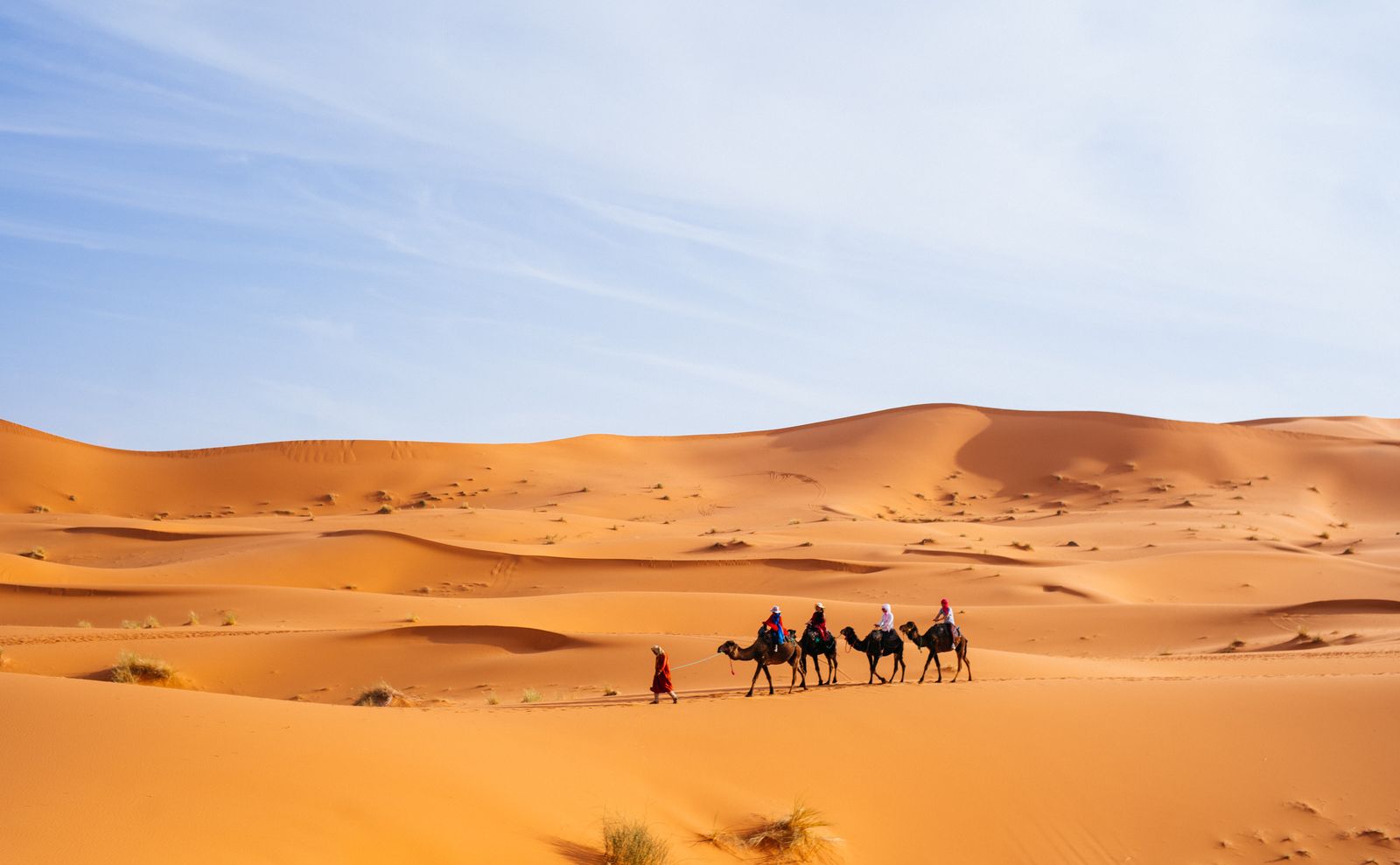
You mount in the late afternoon at the edge of the dunes. The camel used in Morocco is a dromedary (one hump), not a Bactrian camel. Mounting can feel abrupt — the camel rises back legs first, so lean back and hold the saddle handle. The trek to camp typically takes 45 minutes to 1.5 hours, ending as the sun sets over Erg Chebbi in orange and pink light. Sunrise treks back the next morning follow the same route in reverse.
Desert Camps — What Kind Should You Book?
Desert camps range from basic shared tents to genuinely luxurious accommodations with en-suite bathrooms and hotel-level service. The gap between "luxury camp" marketing photos and the reality can be significant with less reputable operators — this is the single most common source of disappointment in Sahara trip reviews.
| Camp type | Price/night | What to expect | Best for |
|---|---|---|---|
| Budget/standard camp | €30–65 | Shared or basic private tent, shared bathroom facilities, simple dinner and breakfast | Most travelers — perfectly comfortable and authentic |
| Mid-range camp | €65–130 | Private tent, better bedding, sometimes en-suite, upgraded meals | Couples wanting more comfort without luxury pricing |
| Luxury camp | €180–250+ | En-suite tent with private bathroom, hot showers, restaurant-quality dining, sometimes a pool | Special occasions, honeymoons, travelers prioritizing comfort |
What to Pack for the Sahara
The desert punishes unprepared packing more than almost anywhere else in Morocco — extreme heat by day, cold by night, sun, and wind-blown sand all need planning for.
- Layered clothing — t-shirt/shorts for daytime, warm fleece or jacket for night, even in summer.
- Wide-brimmed hat and high-SPF sunscreen — the Sahara sun is significantly stronger than coastal Morocco.
- A large cotton scarf (chèche) for wind-blown sand protection — most camps provide one but bringing your own is more comfortable.
- Closed-toe shoes for the camel trek and camp — sand gets very hot and occasional insects are best avoided barefoot.
- Sunglasses — glare off the dunes is intense, especially midday.
- A headlamp or torch — camps often have limited lighting after dark.
- A portable power bank — most camps run on solar and outlets can be limited.
- Reusable water bottle — carry 2+ litres per person per day, more in summer.
- Basic first aid kit including rehydration salts — useful for heat-related discomfort.
- A light sleeping layer even in summer camps — desert nights cool rapidly after sunset.
Sahara Cities and Towns — A Quick Guide
The Sahara route passes through several towns that are destinations in their own right, not just fuel stops.
| Town | Distance from Marrakech | Why it matters | Worth stopping? |
|---|---|---|---|
| Aït Ben Haddou | 190 km, ~3h | UNESCO kasbah, filmed in Gladiator and Game of Thrones | Yes — essential stop, 1–2 hours |
| Ouarzazate | 200 km, ~3h15 | "Hollywood of Africa" — Atlas Studios, Taourirt Kasbah, good overnight stop | Yes — ideal overnight break point |
| Dadès Gorge | 280 km, ~4h30 | Dramatic rock valley, "Road of 1000 Kasbahs" begins here | Yes if time allows — spectacular scenery |
| Todra Gorge | 330 km, ~5h | Narrow canyon with 300m rock walls — popular rock climbing spot | Yes if time allows — combine with Dadès |
| Erfoud | 480 km, ~7h30 | Fossil trade town — final major town before Merzouga | Brief stop for fuel/supplies |
| Rissani | 520 km, ~8h | Traditional souk town, closest to Merzouga | Brief stop — interesting Monday/Thursday market |
| Zagora | 370 km, ~6h | Gateway to Erg Chigaga, famous "Timbuktu 52 days" sign | Yes if heading to Erg Chigaga route |
World Cup 2030 and the Sahara Route
While the Sahara itself is not a host city, the route to Merzouga passes through or near several 2030 World Cup host cities — Marrakech and, further afield via connecting roads, Agadir. Travelers combining a World Cup match with a Sahara extension should plan for the 8–10 hour drive as a genuine 2-day addition to their trip, not a rushed side trip.
Plan your Morocco trip with us
MoroccoForYou is a Morocco-based agency. Tell us your dates on WhatsApp — we reply within an hour with a draft itinerary, hotel options and a car or driver quote.